Culture
How to be a good guest in Japan
Nobody expects a visitor to know every custom. What people notice is whether you’re trying. These are the things we learned living in Japan, plus what the official tourism pages ask of visitors.
00The short version
- 01Sit down to eat. Don’t walk and eat.
- 02No phone calls on trains or buses.
- 03Carry your trash until you find a bin.
- 04Shoes off where shoes come off.
- 05Keep your voice down.
- 06Try the Japanese, even if it’s broken.
Overall, be very respectful of the people in Japan.
From living there is our own advice. Official guidance comes from the tourism pages listed at the bottom. Facts last checked 12 Nov 2026.
017 things
At the table
Most of the rules people worry about are here, and most of them are easy.
- From living there
Sit down to eat
Don’t walk and eat. Buy the snack, then stand by the stall or find a seat and finish it there.
- From living there
Never stand chopsticks in rice
Chopsticks upright in a bowl of rice is something you see at a funeral. Lay them across the bowl or on the rest.
- From living there
Don’t rub your chopsticks together
It tells the restaurant you think its chopsticks are cheap.
- Official guidance
Say it before and after
Itadakimasu before you eat, gochisosama deshita when you finish. Both are noticed.
- Official guidance
Slurping noodles is fine
It’s the normal way to eat ramen, soba and udon. You don’t have to, and nobody minds either way.
- Official guidance
Order what you can finish
Leaving food is poor form, and taking leftovers home is not usually done.
- Official guidance
Soy sauce on the fish
With sushi, dip the fish side, not the rice, and keep the wasabi out of the soy sauce dish.
026 things
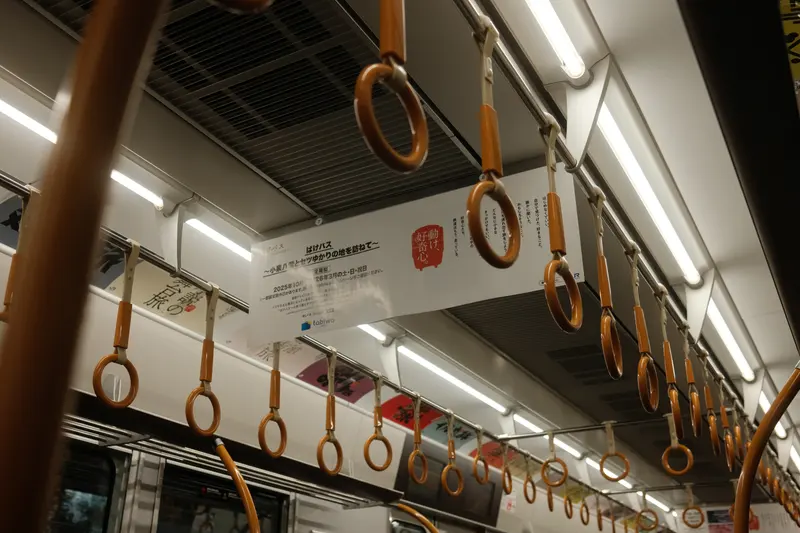
On trains and buses
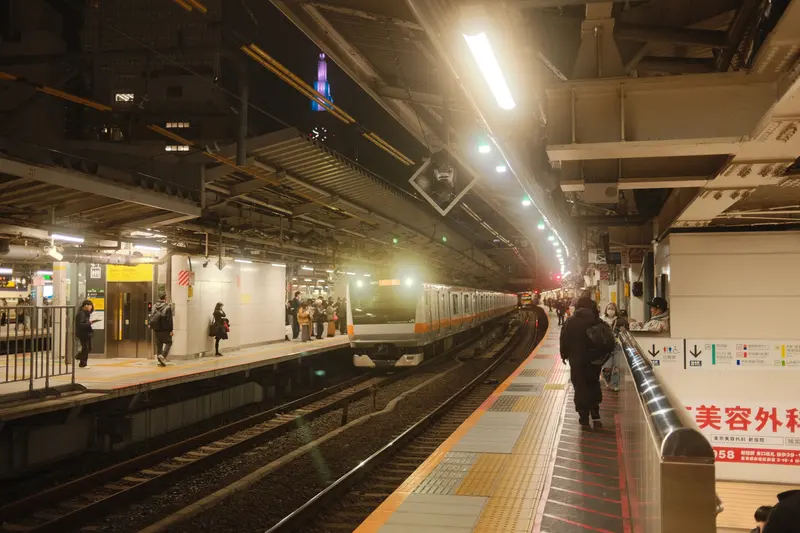
A full train in Japan is quiet. That is the whole idea.
- From living there
No calls, no FaceTime
Don’t talk on the phone or video call on any public transit. It’s extremely rude. Put the phone on silent and text.
- From living there
No sound from your speakers
Don’t play music or video out loud from a phone or a watch. Use headphones.
- From living there
Respect the women-only cars
Some trains have cars marked for women only, mostly at rush hour. Men should stay out of them when the signs apply. Young children, and people with disabilities and their carers, may ride.
- From living there
Leave the priority seats
The marked seats are for older people, pregnant women, people with disabilities or injuries, and anyone with a small child. Give them up without being asked.
- Official guidance
Line up and let people off
Stand in the marked lines on the platform, behind the yellow line, and let everyone get off before you step on.
- Official guidance
Bags out of the way
Take your backpack off and hold it low or put it on the rack when the train is busy.
036 things
Out on the street
Japan is clean and calm because everyone does a small part of the work.
- From living there
Carry your trash
There aren’t many trash cans in Japan. Use the bins at a convenience store, or take it back to your hotel with you.
- From living there
Sort it, even at the hotel
Burnable, plastic, cans and bottles go in separate bins. Sort your trash as best you can, wherever you’re staying.
- From living there
Don’t be loud
Keep your voice down in the street, in restaurants and in hotel corridors. Don’t cause a nuisance.
- From living there
Follow the rules
Signs mean what they say. Follow the rules and the laws while you’re here, including the small ones.
- Official guidance
Smoke only where it’s marked
Smoking while walking is banned in many city areas and can bring a fine. Look for a designated smoking area.
- Official guidance
Don’t stop in the road for a photo
Narrow streets are still streets. Kyoto lists a fine of up to 50,000 yen for obstructing traffic.
045 things
Homes, temples and shrines
If you’re not sure whether shoes come off, look at the floor by the door.
- From living there
Respect where shoes are allowed
In someone’s home, at a temple, in some restaurants and inns: if there’s a step up and a row of shoes, yours come off too.
- Official guidance
Slippers have rules too
Take slippers off before you step on tatami, and swap to the toilet slippers in the bathroom. Then swap back.
- Official guidance
At a shrine
Bow once at the torii gate and walk to one side of the path. Rinse your hands at the basin. At the hall: an offering, two bows, two claps, a prayer, one more bow.
- Official guidance
At a temple
No clapping. Put your hands together, pray quietly, and bow.
- Official guidance
Wear shoes that come off easily
You may take them off several times in a day. Good socks help.
054 things
Geiko and maiko in Kyoto
This one has real consequences, so we’ve looked up exactly what Kyoto says.
- From living there
Don’t take pictures of the geisha
In Kyoto you can actually get fined for it. If you see a geiko or maiko on her way to work, let her pass.
- Official guidance
What the city says
Kyoto’s official page: do not stop, touch, follow, or take unauthorized photos or videos of any geiko or maiko. Blocking someone’s path or following them can mean a fine of under 10,000 yen or detention.
- Official guidance
The private lanes in Gion
Residents of Gion have banned photography on the private side streets and post a 10,000 yen fine. The main street, Hanamikoji, is public, but it isn’t a pedestrian street.
- Official guidance
Stay off private property
Don’t step into a doorway, garden or shrine precinct for a photo unless it’s open to visitors. Kyoto lists trespassing and littering fines on the same page.
064 things
Onsen and public baths
Bathing with strangers is normal here, and the routine is always the same.
- Official guidance
Wash before you get in
Sit at a washing station, use soap, and rinse completely. The bath is for soaking, and everyone shares the water.
- Official guidance
Nothing goes in the water
No swimsuit unless the bath says so, and keep the small towel out of the bath. Put it on your head or on the side. Tie up long hair.
- Official guidance
Keep it quiet
Speak softly, don’t swim or splash, and don’t take your phone into the bathing area.
- Official guidance
Tattoos: check first
Many baths don’t allow them. Some town bathhouses are more relaxed, small tattoos can sometimes be covered, and a private bath solves it.
073 things
If you lose something
Japan is very safe, and lost things have a way of coming back.
- From living there
Go to the nearest police box
Find the police box or police station closest to where you lost it and report it there.
- From living there
On a train, ask at the station
If you lost it on a train, talk to the staff at a station on that line.
- From living there
Expect to get it back
You’re typically going to be able to get your stuff back. Know what was in the bag and roughly when and where you last had it.
082 things
Use the language
- From living there
Try, even if it’s bad
Use Japanese, even if it’s broken. People appreciate you trying to speak their language, and a sumimasen and an arigato gozaimasu go a long way.
- Official guidance
A small bow is enough
A nod or a small bow when you say thank you, or when you walk into and out of a shop, is always welcome. You don’t need to learn the formal rules.
Where the official guidance comes from
The 37 points on this page are a mix of our own experience and what Japan’s tourism bodies publish for visitors. We read these pages on 12 Nov 2026. Fines and local rules change, so check the city’s own page before you rely on a number.